Kishtwar — The Land of Sapphire
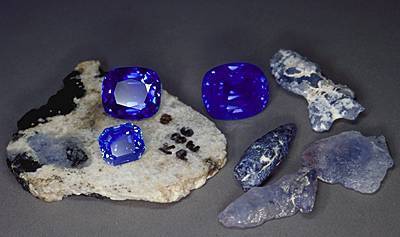
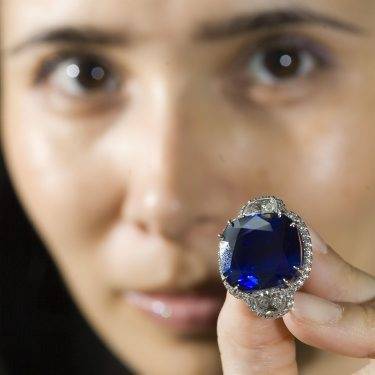
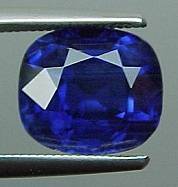
Kishtwar is celebrated worldwide as the Land of Sapphire and Saffron — and it is the sapphire of Paddar that has given the district a place on the global gemstone map. Formally known as Neelam (नीलम) and declared the "Pride of Jammu & Kashmir", the Paddar sapphire is recognised by gemologists and collectors worldwide as the finest blue sapphire on earth — surpassing even the famous Ceylon (Sri Lanka) and Burma varieties in terms of colour depth, durability, and natural beauty.
Beyond sapphire, Kishtwar's mineral wealth is extraordinary. Quartz is also found in Paddar, and Ruby Gems are found in the mountainous areas of the district — making Kishtwar one of the richest natural gemstone territories in the entire subcontinent. The district is also India's biggest donor of income to the national exchequer through its hydroelectric power potential and mineral wealth.
The Chance Discovery of 1881
There was a chance discovery of Sapphire mines in Paddar Pargana in 1881 AD, during the Dogra rule of Maharaja Ranbir Singh — a discovery that would change the economic and cultural identity of Kishtwar forever.
The mines are located at a staggering height of 4,267 metres (14,000 feet) above sea level — on the mountain top above Sunchan village, approximately 40 kilometres from Atholi. Sunchan itself sits at 3,385 metres (11,100 feet) above sea level, and in 1881 there was barely any habitation in the area — yet here, in one of the most remote and inaccessible corners of the Himalayas, lay one of the world's greatest natural treasures.
In the same year of their discovery, Maharaja Ranbir Singh appointed an officer to look after the affairs of the mines and put necessary protective measures in place. A dedicated Department of Mining was formally established in 1909 AD, which was later renamed J&K Minerals Ltd. — a public undertaking granted permission for the exploration and exploitation of the state's mineral wealth.
The sapphire also appears in a precise geological context: Sumcham — the Neelam Khan area — lies six kilometres ahead of Machail towards the North-East of Paddar, in a valley at approximately 14,800 feet. This sacred region, also known as Devbhoomi (the land of the goddess) and home to the revered Chandi Mata Machail shrine, combines extraordinary spiritual and natural heritage in one remarkable location.
Location, Geology & Formation
The Paddar sapphire mines lie on the southern face of a NW-SE trending spur south of the Great Himalayan Range. The mine area falls within the Paddar Formation — an interbedded sequence of metasediments and metabasics intruded by numerous pegmatite and quartz veins. Sapphire occurs in the pegmatite veins intruded in these ancient metamorphic rocks.
直 What is Sapphire?
Sapphire is a variety of Corundum — a natural oxide of alumina (52.9% alumina, 47.1% oxygen). It ranks 9 on the Mohs hardness scale, making it the hardest natural mineral after diamond. Pure corundum is colourless; trace elements give sapphire its prized blue colour.
️ Climate of the Mine Area
The mine area receives very heavy snowfall and remains cut off from the rest of the country from December to March. Temperature rises to 10–25°C in May–June. The area receives good rainfall. June to September is the only viable working window for extraction operations.
歷 Wildlife of the Region
The Neelam Khan area is home to Himalayan bears, musk deer, ibex, and monkeys. Snow leopards are also reported in the area. Hill partridge (Ram Chakor) and rock pigeons are among the bird species, and Chanwar (cross between yak and cow) is a prized domestic animal of Paddar.
Mining History — From Discovery to Today
Chance Discovery — Maharaja Ranbir Singh
Sapphire mines accidentally discovered in Paddar Pargana during Dogra rule. An officer is appointed immediately to oversee the mines. Protective measures are put in place.
First Geological Survey Published
Tom D. La Touche of the Geological Survey of India publishes the landmark report "The Sapphire Mines of Kashmir" — the first scientific documentation of the Paddar mines and their extraordinary geological formation.
Department of Mining Established
A formal Department of Mining is created to manage Paddar sapphire extraction. It is later renamed J&K Minerals Ltd. — the public undertaking that holds mining rights to this day.
Last Major Auction — Srinagar
A major sapphire auction is held in Srinagar. It remains the benchmark for subsequent auctions. After this, extraction work is largely halted and the mines enter a long period of neglect.
Scientific Extraction Decision + Auction Revival
In 2007, the government takes a formal decision on scientific extraction. Teams of experts are sent to Paddar. Global tenders are floated — around seven companies participate, three are shortlisted. In 2008, manual extraction yields 3–4 kilograms of rough sapphire, raising the department's total holding to approximately 14 kilograms. An auction of 34 lots of rough sapphire corundum in the winter capital fetches Rs 1.31 crore — far surpassing the 1988 Srinagar auction.
International Tenders — Ongoing Delays
In 2013, international tenders are floated for joint venture partners to scientifically exploit the mines. Despite years of process, the Request for Proposal (RFP) has not reached conclusion. Extraction work remains suspended for over two decades, even as the Paddar sapphire continues to be recognised globally as the world's finest.
Why Paddar Sapphire is the World's Finest
Despite the rich blue sapphires of Sri Lanka, Burma, Thailand, and Australia — Paddar sapphire from Kishtwar is widely regarded by the global gemstone community as the best in the world for its unmatched combination of qualities:
Paddar — The Valley of Sapphire
Paddar Valley is the farthest corner of District Kishtwar — on the south-eastern side, touching its borders with Himachal Pradesh, Zanskar Valley of Ladakh, and Marwah-Warwan Valley. It was raised to the status of a Tehsil in 2005 with headquarters at Atholi. Paddar Valley comprises five Patwar Halqas and thirty-two villages.
This remote valley is known for far more than its sapphires. Paddar is Devbhoomi — the sacred land of the goddess. The Machail Mata shrine (home of Chandi Mata), one of the most revered high-altitude goddess shrines in the Himalayas, draws tens of thousands of pilgrims annually during the Machail Mata Yatra. The Sumcham area where the sapphire is found lies just six kilometres north-east of the Machail shrine — making this a place where extraordinary natural wealth and deep spiritual heritage exist side by side.
Paddar is also rich in other resources: Zeera (cumin), Guchhi (Morchella mushrooms), Rajmash (kidney beans), and forest products are produced here. Ancient Baolies (step-wells) — believed to have been built by the Pandavas — are found in almost every village of Paddar, including Pandail, Massu, Atholi, Ligri, Ghar, Sohal, Tatapani, and Ishityari, adding an extraordinary archaeological dimension to this already remarkable valley.
Economic Potential — A Treasure Still Waiting
"Paddar sapphire is perceived to be the best in the entire world for its unmatched qualities of durability, variety, and beauty — yet its full economic potential remains largely unrealised."
— mykishtwar.comDespite holding what is arguably the world's finest sapphire, Kishtwar has not yet been able to fully leverage this extraordinary natural asset for the economic development of the region. The process of scientific extraction and international joint venture tendering has moved slowly — the RFP (Request for Proposal) for selecting a joint venture partner remains unfinalized, and formal large-scale extraction has been suspended for over two decades.
The people of Kishtwar, and particularly of Paddar, look forward to the day when this "Pride of J&K" will contribute meaningfully to the economic prosperity of the region and to the national exchequer — while being extracted responsibly, with full environmental protection of the fragile Himalayan ecosystem in which it is found.
直 Other Precious Stones of Kishtwar
Quartz: Also found in Paddar (Kishtwar) — an important industrial and ornamental mineral.
Ruby Gems: Found in the mountainous areas of Kishtwar — another precious corundum variety alongside sapphire, making Kishtwar unique in hosting both red and blue corundum.
Garnet, Kyanite, Sillimanite: Associated metamorphic minerals found in the sapphire mine area's rock formations — indicators of the ancient geological forces that created Kishtwar's mineral wealth.
Did you know? The Paddar sapphire mines are accessible only by a 4–6 day trek from the nearest road-head at Gulabgarh — one of the most remote mine locations on earth. The last village of District Kishtwar on the Paddar side is Tun, which borders Himachal Pradesh — beyond which lies the Omasi La (Pass) at 5,340 metres, one of the highest passes in the region. This extraordinary remoteness has both protected the mines from over-exploitation and limited the economic benefit to the people of Paddar.
Natural Heritage & Gemstone Series | mykishtwar.com · Kishtwar, Jammu & Kashmir, India