What is Cultural Heritage?
Cultural heritage is the legacy of physical artefacts and intangible attributes inherited from past generations, preserved in the present, and bestowed for the benefit of future generations. It encompasses three broad dimensions:
🏛️ Tangible Heritage
Buildings, monuments, temples, shrines, landscapes, archaeological sites, artefacts, and ancient step-wells (Baolies).
🎭 Intangible Heritage
Folklore, oral traditions, language, music, festivals, rituals, crafts, and the accumulated knowledge passed down through generations.
🌿 Natural Heritage
Culturally significant landscapes, sacred rivers, mountains, biodiversity — including Kishtwar's famed saffron fields and sapphire-bearing mountains.
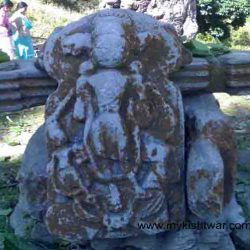 |
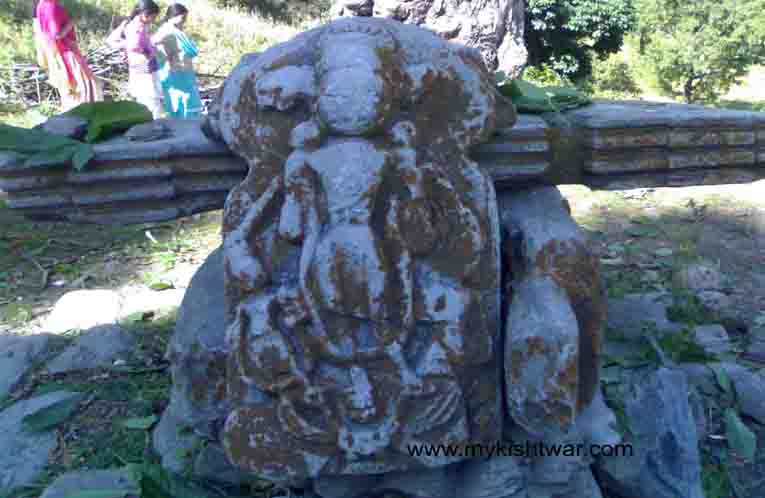
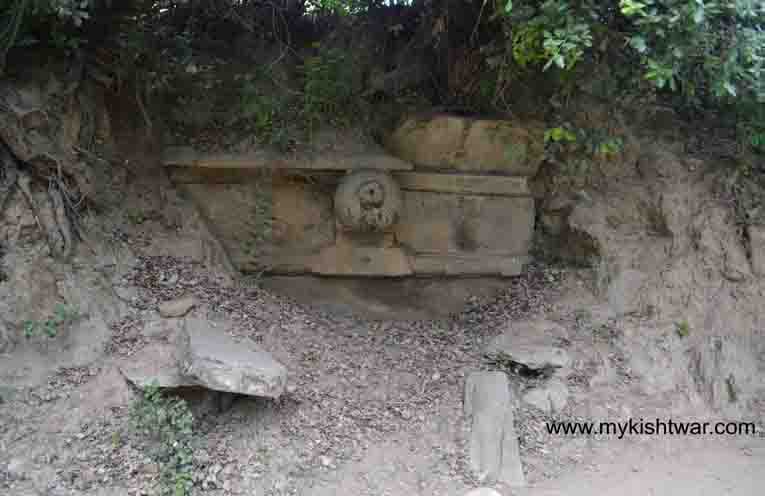
| Idol at Nagseni |
Kishtwar — the Land of Saffron, Sapphire, and Shrines — is a district whose cultural heritage is as rich and layered as the Himalayan geology that surrounds it. Its history stretches back to the Mahabharata era, when it was known as
Lohit Mandal. Its ancient name
Kashthavata appears in the Rajatarangini as early as 1063 AD. Through every century since, Kishtwar has accumulated a heritage of temples, Sufi shrines, Buddhist monasteries, and archaeological wonders that challenge our understanding of the past.
What makes Kishtwar's heritage uniquely extraordinary is its tradition of communal harmony. The famous Hindu shrines and the equally revered Muslim pilgrimage centres are held in the highest esteem by people of every faith — Hindus, Muslims, and Sikhs living together with amity and brotherhood.
🛕 Hindu Temples and Sacred Shrines
🏛️
Shri Gori Shanker Mandir Sarkoot
The Gori Shanker Temple at Sarkoot is the most ancient and most revered temple of Kishtwar town — also known as the Sarkoot Mandir. Located on the western side of the Chowgan, approximately 1 km from the main bus stand, this temple holds a central place in the spiritual and cultural life of Kishtwar.
The temple houses idols of Shiv Parvati, Shri Raghunath Ji, Maa Sita, Shri Laxman Ji, Shri Hanuman Ji, Maa Durga, Shri Ganesh Ji, and Shri DharamRaj Ji, along with various Shiv Lingams. To its left stands a large Hawan Kund and the Samadhi of Saint Shri Tulsi Giri Ji Maharaj. In front is the scenic Sarkoot Dal pond, a park, and a dharamshalla for pilgrims.
This temple is the starting point of the famous Janmashtami procession and the Sarthal Devi procession. Daily prayers, kirtans, Yag-Hawan, and Bhandara are organised regularly. The Kishtwar Development Authority is developing the nearby lake to make this a hub for tourists and pilgrims alike.
🏛️
Kartik Swami Temple
Kartik Swami — the eldest son of Lord Shiva — is the presiding deity of the Hindus of Kishtwar. The Kartik Swami temple occupies a prominent place in the town and is deeply woven into the daily and ceremonial life of the community.
A cherished local tradition: families where male babies are born visit the shrine after Raksha Bandhan with friends and relatives for thanksgiving. Before any function or festival at home, Kishtwar families first pay their obeisance here and seek the deity's blessings for success.
🏔️
Shri Machail Mata Shrine — The High-Altitude Yatra
The Machail Mata Shrine in Paddar is one of the most revered high-altitude goddess shrines in the Himalayas. The annual Machail Mata Yatra draws tens of thousands of pilgrims — the 2025 Yatra saw over 5,000 pilgrims in its opening days alone. Pilgrims undertake a challenging trek through breathtaking mountain landscapes to reach the shrine and seek the goddess's blessings.
The Machail Yatra is celebrated with great fervour during the Navratra season and is considered one of the most auspicious pilgrimages in all of Jammu and Kashmir.
🌺
Sarthal Mata and Hudh Mata Shrines
Sarthal Mata and Hudh Mata are two of the most beloved goddess shrines of Kishtwar, drawing pilgrims from across the region. The Hudh Mata Trisandhya Yatra is a major annual pilgrimage celebrated with deep devotion and community participation. These shrines are cultural anchors that have held the Kishtwari identity together across centuries of change.
🕌 Sufi Shrines and Muslim Heritage
Kishtwar's Islamic heritage is deeply rooted in the Sufi tradition — brought to the region by great saints from Baghdad who transformed the spiritual landscape of the entire Doda region. These Ziarats are visited by devotees of all faiths, a living testament to Kishtwar's culture of religious coexistence.
🕌
Shah Farid-ud-Din Bagdadi — Astaan Baala
Hazrat Shah Farid-ud-Din Bagdadi was a great Sufi saint descended from the saintly family of Syed Abdul Qadir of Baghdad. He arrived in Kishtwar during the reign of Raja Jai Singh, accompanied by four disciples. He had previously been hosted as a state guest by Mughal Emperor Shah Jahan in Delhi and Agra before making Kishtwar his permanent home.
The saint first stayed at Drangwaji, near the Neelkanth Mahadev temple. His spiritual presence was so powerful that Raja Jai Singh himself converted to Islam, taking the name Bakhtiar Khan, and had a house constructed for the saint near his palace. Through his presence, Islam spread across the Doda region, Mahore, Gulabgarh, and Udhampur district.
Hazrat Shah Farid-ud-Din passed away at age 99 and was buried at Astaan Baala, Kishtwar. Thousands of devotees visit the shrine annually. On the day of the Urs, the mammoth gathering speaks of the enduring devotion of his followers across all faiths.
🕌
Shah Asrar-ud-Din Bagdadi
Shah Asrar-ud-Din Bagdadi is another revered Sufi saint of Kishtwar, whose shrine is a significant pilgrimage destination. Like Shah Farid-ud-Din, his spiritual legacy is part of the same Baghdad Sufi lineage that shaped the religious and cultural identity of Kishtwar. The shrine draws devotees of all faiths in a tradition of cross-community reverence unique to this Himalayan district.
⛏️ Archaeological Sites and Ancient Wonders
Kishtwar's archaeological heritage is extraordinary and largely undiscovered by the wider world. Scattered across its plateaus and valleys are ancient step-wells (locally called Nags or Baolies), Kashmiri Nagara temples, lost Buddhist monasteries, and stone structures that challenge our understanding of the region's ancient civilisation.
🪨
Bindraban — Ancient Temple and 18 Baolies
Bindraban, situated north-west of Kishtwar, is a historical and religious hub for the Hindu community. Here stands an ancient temple of Lord Rama and Hanuman, alongside 18 ancient Baolies (step-wells) whose construction date remains unknown. Local belief holds that these were constructed by the Pandavas during their 14-year exile.
Similar ancient Baolies/Nags have been found across Kishtwar at Telmoche, Arase, Hatta, Bun Kuleed, Nagini, Bonpanyar, Inderpanyar, Kundali, Sangrambhatta, and many more locations — as well as outside the plateau in Kuntwara, Nagseni, Paddar, Saroor, Sarthal, and Marwah.
🏛️
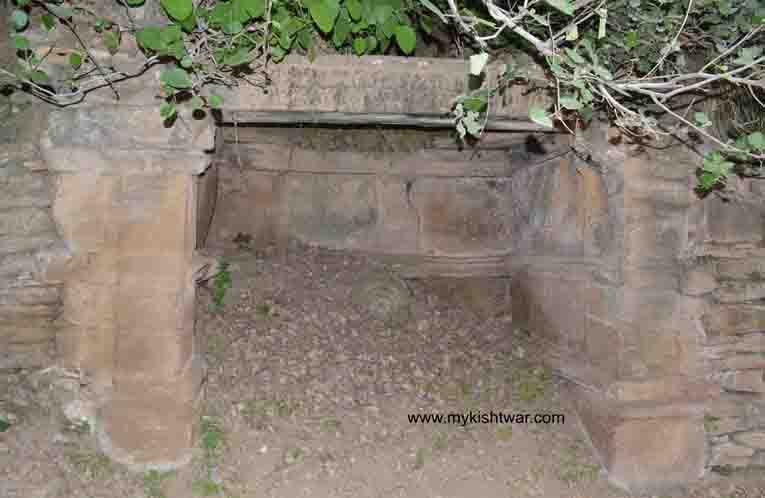
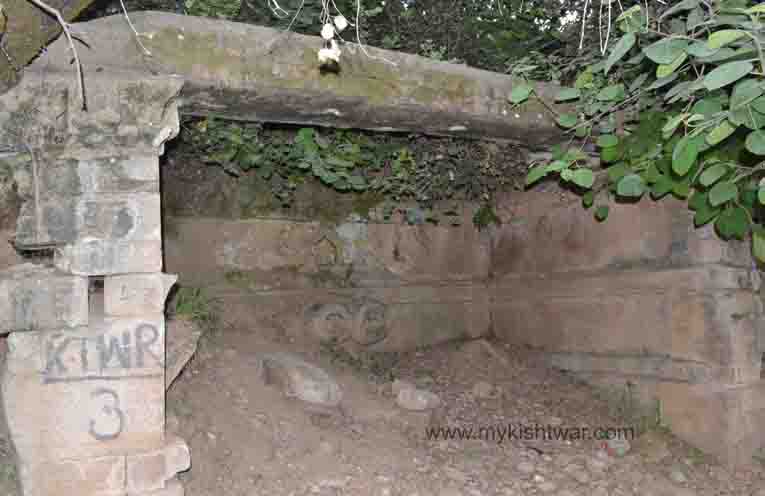
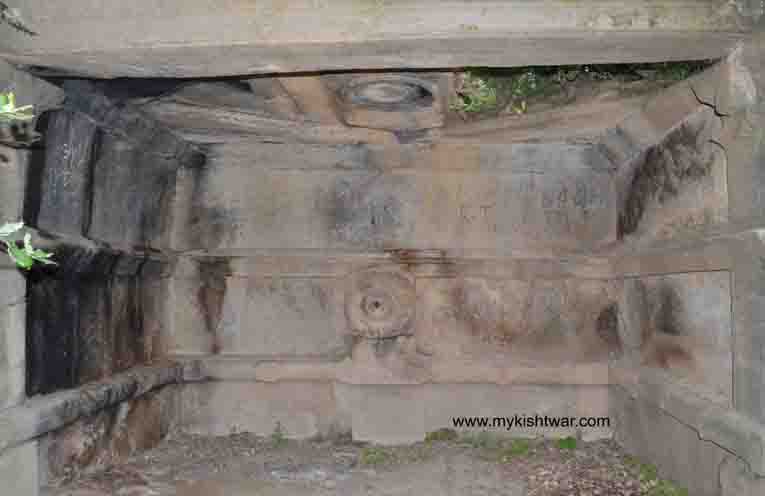
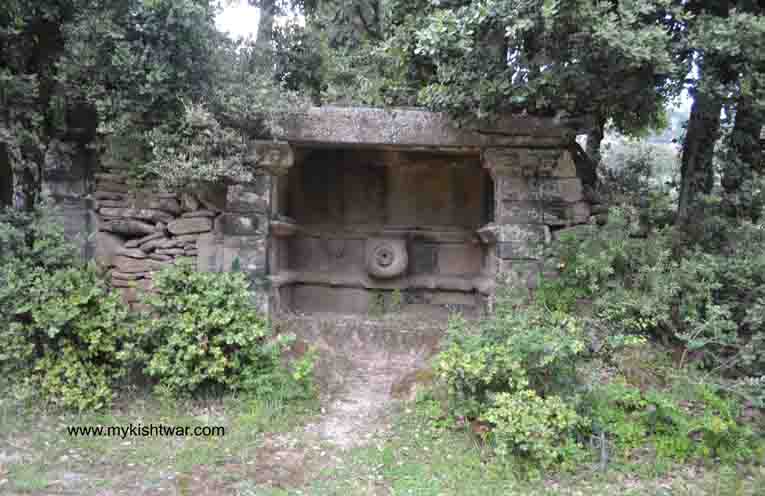
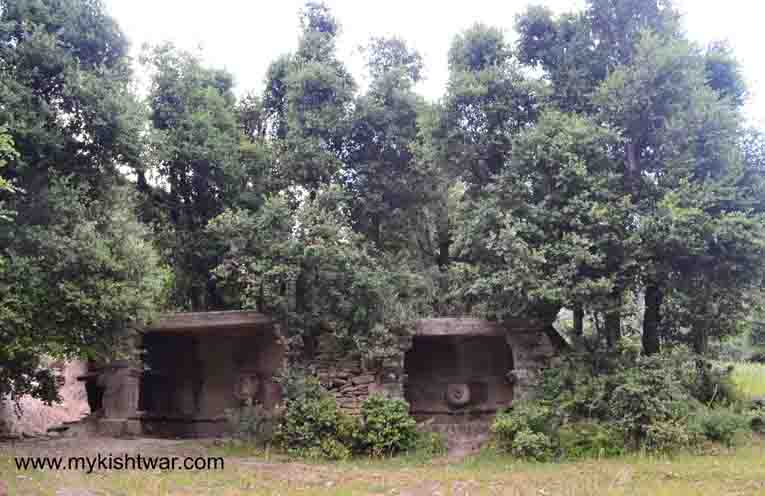
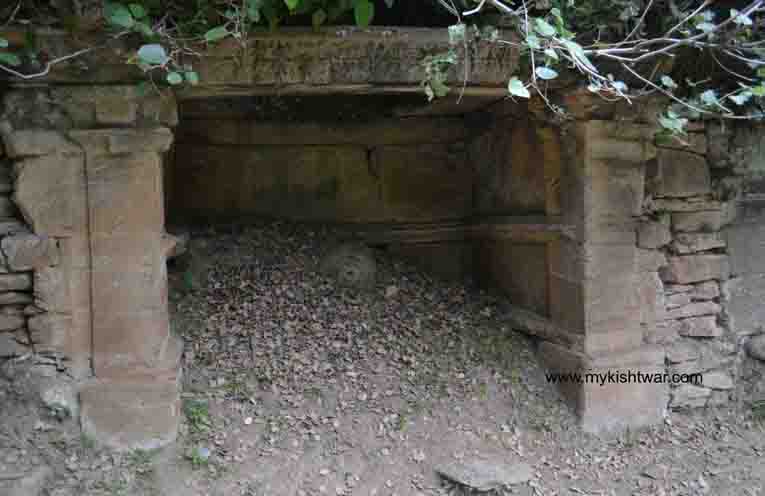
Twin Ancient Stone Temples of Cherji — Kashmiri Nagara Architecture (8th–11th Century CE)
In the rugged hills of Cherji village, Nagseni Tehsil, stand two modest stone shrines — silent witnesses to a forgotten chapter of Western Himalayan architecture. Dating to the 8th–11th centuries CE, these twin temples are studied as examples of Kashmiri Nagara architectural style, representing a tradition of temple-building that once flourished across the Himalayan belt — and whose presence in Kishtwar is only now being properly documented.
☸️
The Lost Monastery of Ahiliya — Buddhist Heritage of Paddar
In village Ahiliya, Panchayat Gandhari, Tehsil Atholi, Paddar, where the Chenab carves its way through the Greater Himalayas, lies the site of a forgotten Himalayan Buddhist monastery — once a significant seat of Buddhist learning. This lost monastery reminds us that before the medieval period, Buddhist culture had deep roots in Kishtwar — a dimension of its heritage that deserves far greater study and recognition.
🗿
Ancient Mandir and Sites at Drubeel
Drubeel, 37 km north-west of Kishtwar headquarters, is home to the majestic Densher Devta Mandir — a temple of remarkable historical and cultural significance. Archaeological sites at Drubeel provide evidence of ancient settlement and religious practice that reveals how far the ancient town of Kishtwar once extended across the plateau.
🏚️
Ancient Bajar Gosain Mandir — Dedpeth
Dedpeth — a village on the banks of the Maru river (locally called Morye Soder) — is home to an ancient Bajar Gosain Mandir, a forgotten relic of a bygone era. This temple, along with the river's Kishtwari name, reflects the depth of local cultural memory and the way ancient place names and sacred sites have survived in Kishtwar long after the wider world has forgotten them.
🌍 Natural and Geological Heritage
Kishtwar's natural heritage is inseparable from its cultural identity. The Kishtwar Plateau — a unique geological landscape shaped over millions of years — sits at 5,300 feet (1,631 metres) above sea level and presents a canvas of geological and historical heritage unlike anything else in the region.
💎 Sapphire Mines of Kishtwar
The high-altitude Neelam (Blue Sapphire) mines of Kishtwar — particularly in Paddar — produce some of the world's finest sapphires, making this a globally significant natural and cultural heritage site.
🌸 Saffron Fields — Lohit Mandal
Kishtwar's saffron (Kesar) — historically traded across Persia and Central Asia — gives the district its ancient name Lohit Mandal (Land of Saffron). The saffron fields are a living cultural and agricultural heritage.
🏞️ Chowgan — The Ancient Lake
Kishtwar's famous Chowgan ground — covering approximately 520 kanals — was once the ancient Goverdhan Sar Lake. This sacred space, surrounded by diverse trees, remains the cultural heart of Kishtwar town to this day.
🌟 A Call to Preserve Kishtwar's Heritage
Kishtwar's past is shrouded in mystery and its heritage is vast — many sites remain in disrepair and many more await discovery. The ancient Baolies, crumbling temple walls, and forgotten monastery sites of this district deserve urgent attention and protection. These structures provide a window into our ancestors' civilisation, culture, and technology — their ingenuity defying our assumptions about the primitiveness of the ancient world.
We urge the local administration, community members, and heritage enthusiasts to work together to protect, document, and celebrate the extraordinary cultural heritage of Kishtwar — for the benefit of all future generations.
💡 Did you know? Kishtwar is believed by historians to have once possessed its own distinct script — which has unfortunately disappeared over time. The ancient Baolies (Nags) scattered across the plateau are believed locally to have been built by the Pandavas during their 14-year exile — a claim that archaeological research is only beginning to seriously investigate.