 |
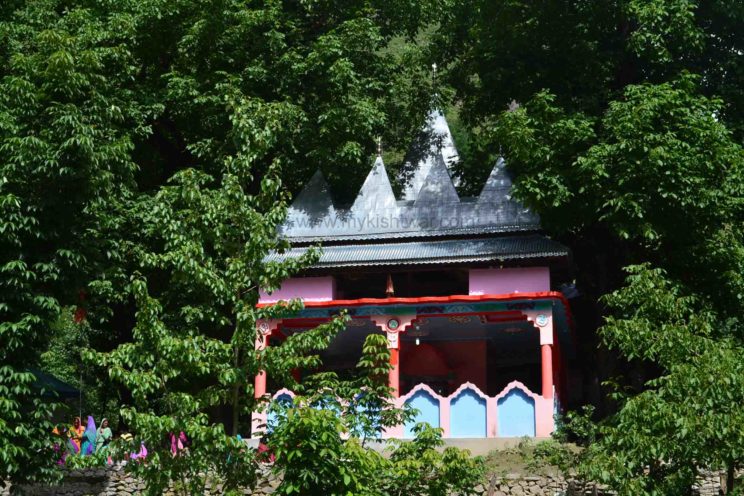
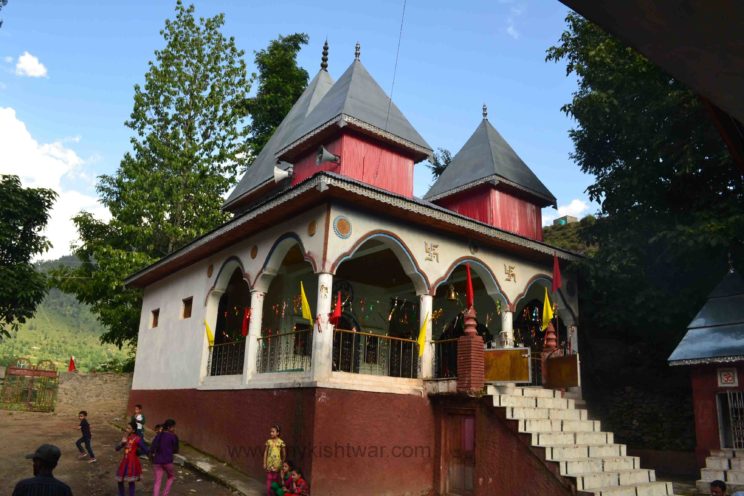
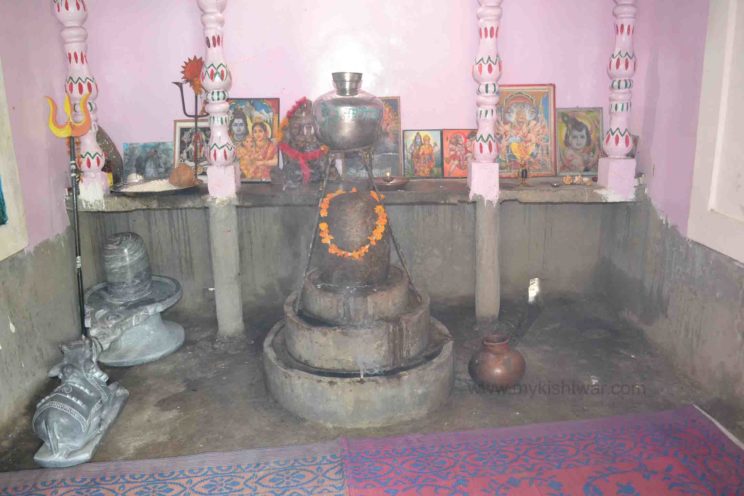
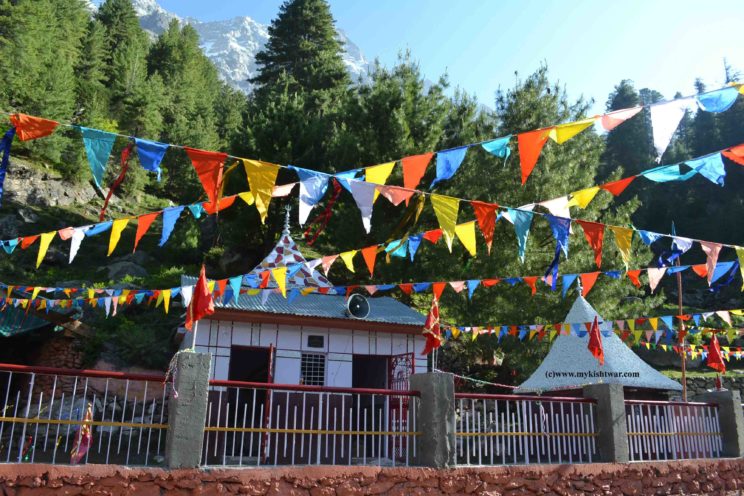
| Hudh Mata Bhawan |
Dachhan — Where One Stands Face to Face with God
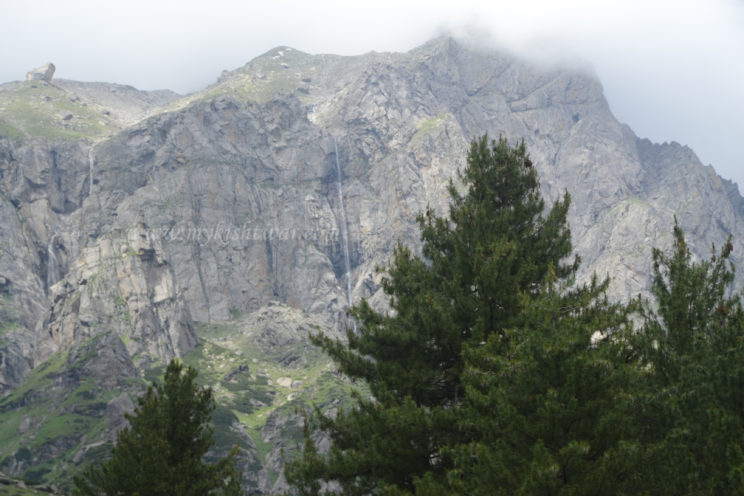
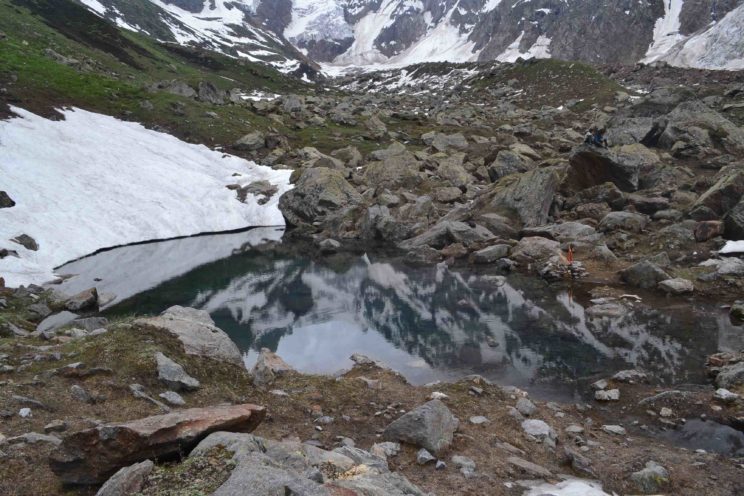
The world-famous Brahma Peaks — towering sky-touching mountains standing side by side in the Nanth Nalla region of Dachhan, Kishtwar — hold in their lap a series of pilgrimage sites of extraordinary spiritual and natural significance. Beyond the last habitation at Nanth Nala, 9 km from village Panjdhara of Dachhan, one finds nature in its fullest bloom — utterly virgin, untouched by the so-called bursting civilisation.
In this sacred valley, one is truly face to face with God in his various manifestations — be they Hudh Mata, Trisandhya, Brahm Sar, or the Brahma Peaks themselves. The area offers extraordinary attraction to trekkers, adventure seekers, pilgrims, nature lovers, and filmmakers alike — and remains one of the best-kept secrets of the Himalayan world.
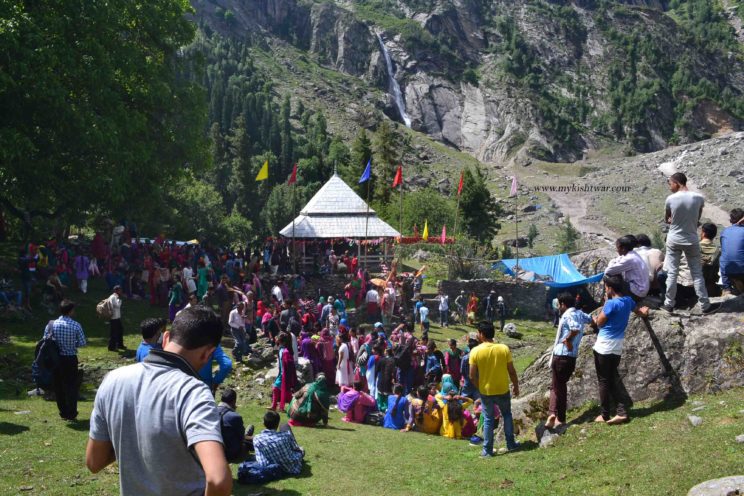
The annual Shri Hudh Mata and Trisandhya Yatra — held every year on Haar Shudi Ashtami (8th day of the bright lunar fortnight of Haar, usually June–July) — has been growing steadily. Initially only the people of Dachhan participated, but it has now gained such momentum that pilgrims from across Kishtwar district, from Jammu, and from as far as Kathua join this extraordinary pilgrimage each year.
Who is Hudh Mata? — The Name and the Goddess
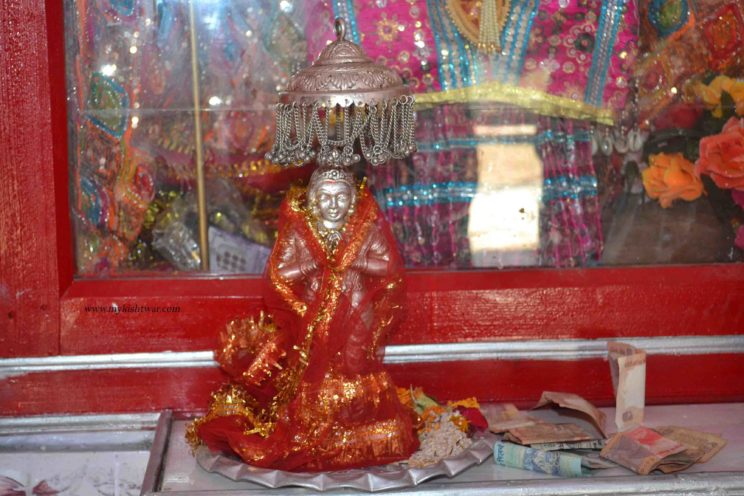
Hudh Mata is the local name of Mata Parvati — derived from the Sanskrit words Hutti or Ahuti, pointing to Parvati Mata in her role as the divine offering. The shrine of Hudh Mata is an abode of the Shiv Parivar (Divine Family of Lord Shiva) — revered in the same manner as the famous Shiv Khori shrine in the Reasi district of Jammu.
In her previous incarnation as Sati — daughter of Daksh Prajapati — the goddess had resorted to self-immolation in her father's Yajna when she could no longer bear the insult inflicted on Lord Shiva by her arrogant father. The name Hudh Mata (from Hutti/Ahuti) directly references this supreme sacrifice — immortalising her devotion to Lord Shiva in the very name by which she is known in this sacred valley.
The Sacred Cave — Three Ice Lingams of the Shiv Parivar
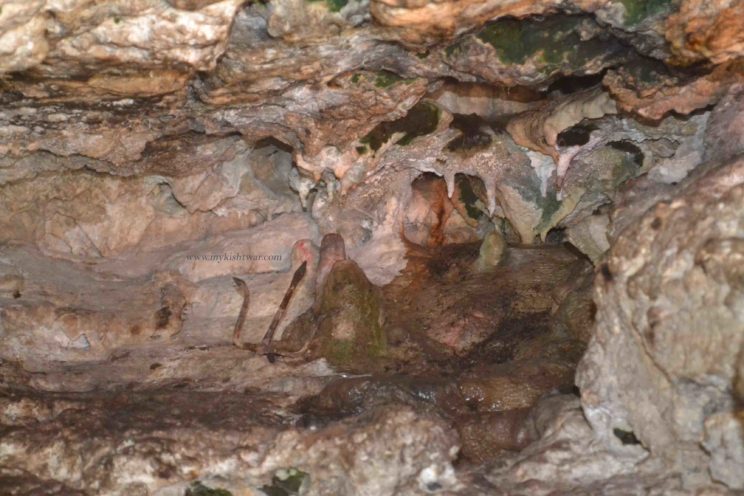
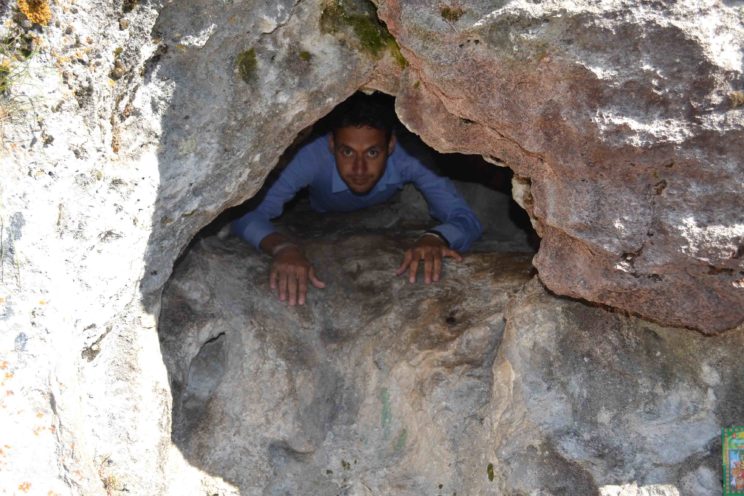
In the Nanth Nala of Dachhan, at an altitude of approximately 2,900 metres (9,600 feet) above sea level, lies a cave of extraordinary sanctity. Inside this cave are three naturally formed Ice Lingams — believed by devotees to be the divine forms of Lord Shiva, Mata Parvati, and their son Lord Ganesha — the complete Shiv Parivar.
From the ceiling of the cave, milky lime water oozes out continuously from a naturally sculptured udder and teats, falling in droplets upon the three Lingams below — a phenomenon so remarkable in its natural precision that it can only be described as miraculous. The entry to the Hudh Mata cave is said to resemble the cave entry of the original Mata Vaishno Devi shrine at Katra.
🏔️ The Divine Relocation Legend: According to local tradition, a devoted shepherd once built a small shrine at the original high-altitude location to worship the goddess. He found the daily climb too arduous. The next morning, to his astonishment, he found the shrine had shifted downhill by half a kilometre — a divine act of compassion making daily worship accessible. The original site, now known as Hudh Kund, still bears the hollow imprint of the original shrine's seat.
Trisandhya — The Stream That Prays Three Times a Day
Trisandhya is a miracle of nature and a gift to humanity — one of the most extraordinary natural phenomena in all of Kishtwar. Approximately 2–3 km from the Hudh Mata Shrine, a stream flows down the slopes of a mountain, then recedes — moving from downward to upward — and finally disappears completely, leaving no trace of water whatsoever.
What makes this even more astonishing: there is no lake, pond, or glacier at the top of the mountain from which the water could originate. It simply appears, flows, recedes upward, and vanishes. This remarkable phenomenon happens multiple times throughout the day — earning the stream the name Trisandhya, meaning "three times of worship" in Sanskrit, in the belief that the stream performs three-times-daily prayers to Lord Shiva, Mata Parvati, and Lord Brahma — who stand nearby in the forms of Hudh Mata and the Brahma Peaks.
The Trisandhya stream is situated directly opposite the Brahma Peaks, with the river Nanth Nalla flowing in between. Pilgrims who are fortunate enough to witness the stream's sudden appearance and take a bath in its waters believe it brings divine good fortune. Some pilgrims wait for hours at the stream's edge for the chance of this auspicious dip. Locals say that in ancient times, the stream would appear three times daily — morning, noon, and evening — with perfect regularity.
Other Sacred Sites Along the Yatra Route
The Yatra Route — From Jammu to the Brahma Peaks
The Shri Hudh Mata Trisandhya Yatra was founded in 1983 by Mahatma Dina Nath Teerath Wasi of Kiyar, Dachhan, who began the pilgrimage from Geeta Bhawan, Jammu. After his Samadhi in 1997 at Dharalan, Kathua, the Yatra has continued from that sacred site. The pilgrimage is now organised by the Shri Hudh Mata Trisandhya Yatra Prabhandak Committee, Dachhan Kishtwar (Regd.), with all arrangements for free boarding and lodging of pilgrims made with the cooperation of local residents.
Trishul Yatra departs from Dharalan. Bus bookings open at Shri Ranbireshwar Mandir, Jammu, 5–8 PM daily in the preceding week.
Shobha Yatra parades through Jammu's main bazaars with chants and bhajans. First night halt at Belicharana Hudh Mandir, Jammu.
Pilgrims travel to Kishtwar. The Yatra is received at the historic Gori Shankar Mandir Sarkoot — the same sacred temple that also hosts the Sarthal and Machail Yatras.
Pilgrims travel via Patimhala by bus and Ikhala (40 km from Kishtwar) by light vehicle, then trek on foot to Sounder — the gateway to Dachhan Valley and the Yatra's official base camp.
With the Holy Mace (Chhari) of Hudh Mata, the procession treks 6 km to Dilgoot. People from every corner of Dachhan throng to welcome and join the Yatra here.
A picturesque 20-km trek through Dachhan's magnificent mountain landscapes to Gugath — the summer resort of Dachhan's shepherds — for the final night halt before the summit.
The final auspicious 8-km trek to the Hudh Mata shrine. Pilgrims take a holy bath, perform darshan of the three Ice Lingams (Shiva, Parvati, Ganesha), and partake of Prasad and Langar. They then proceed 2–3 km further to Trisandhya for a holy bath, and onward to Brahmsar.
Temples Along the Brahma Peaks Trail
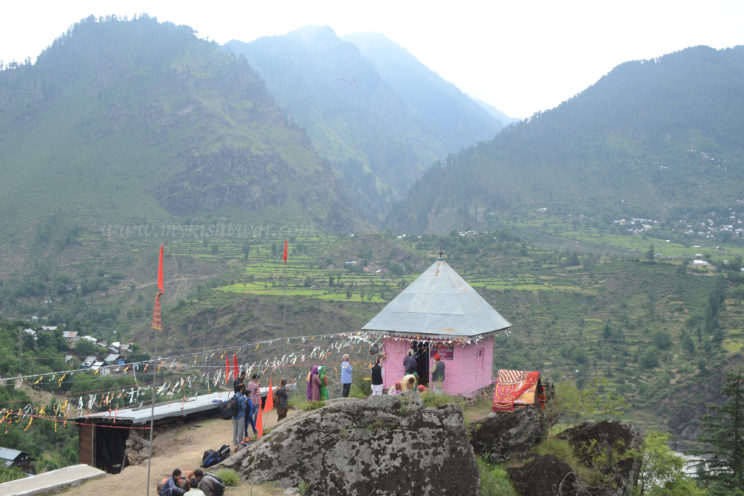
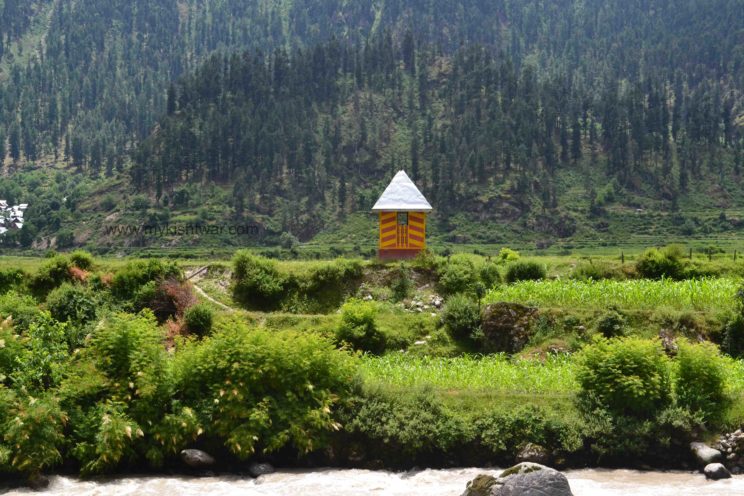
The entire trek route through Dachhan is dotted with ancient temples — testifying to a rich history of spiritual life in these mountains that extends far back into Kishtwar's storied past:
"The tourist circuit of Kishtwar–Ikhala–Panjdhara–Nanth Nalla–Trisandhya–Brahmsar, if developed, can attract thousands of tourists of various tastes. The natural beauty of the area is indeed matchless."
— mykishtwar.com · Published in Terrascape MagazineThe construction of the Dangdhuru–Dachhan Road — currently under development — will be transformative for this region, bringing these virgin shrines onto the religious and tourist map of Jammu & Kashmir and India. Pilgrims are advised to carry raincoats and warm clothes during the Yatra, as the high-altitude terrain of Dachhan is subject to sudden weather changes.
To Kishtwar’s Amarnath – Published in Terrascape Magazine
💡 Did you know? The Hudh Mata Yatra, the Sarthal Devi Yatra, and the Machail Mata Chhari all pass through or begin from Shri Gori Shankar Mandir Sarkoot in Kishtwar — making this ancient temple the spiritual nexus of all three of Kishtwar's greatest pilgrimages. The Brahma Peaks of Dachhan are also one of the most challenging mountaineering objectives in the entire region — making this Yatra a rare combination of pilgrimage, trekking, and high-altitude adventure that is rivalled by very few destinations in India.
Pilgrimage & Nature Heritage Series | mykishtwar.com · Published in Terrascape Magazine | Kishtwar, J&K, India