Ads

Type Here to Get Search Results !

Tehsil Marwah

0

District Kishtwar · Jammu & Kashmir

Tehsil Marwah

The Untouched Himalayan Paradise of the Chenab Valley

🏔️ Inner Himalayas  |  🌿 Marusudar River Valley  |  ♨️ Tatapani Hot Springs
~40,000
Population
21
Revenue Villages
307 km²
Area
2,000–2,200 m
Valley Floor Elevation
3,670 m
Margan Top Pass
100 km
Marwah–Anantnag Road

"Tucked deep inside the rugged embrace of the Great Himalayas, Tehsil Marwah is a place where time slows down — where ancient rock engravings whisper of lost civilisations, the Marusudar River hums through wide alluvial meadows, and forests alive with snow leopards and musk deer stretch to the edge of Zanskar. This is Kishtwar's most pristine valley — an untouched paradise waiting to be discovered."

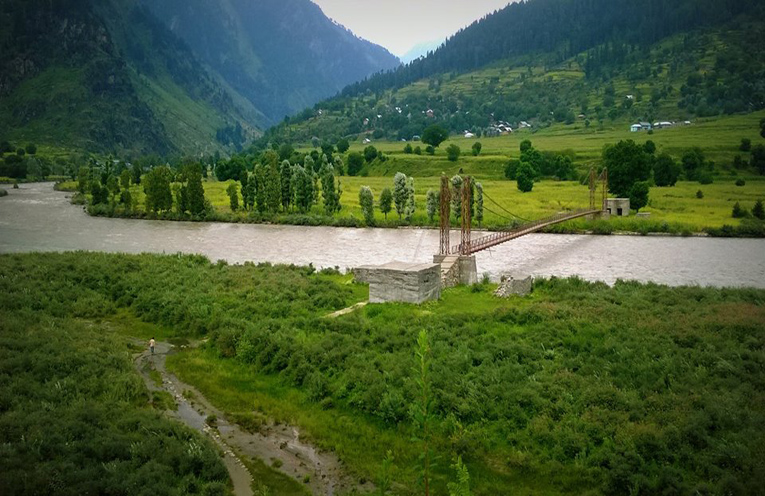
Tehsil Marwah is one of the most beautiful and remote tehsils of the Chatroo Sub-Division in Kishtwar District, Jammu and Kashmir. Nestled amidst the mighty inner Himalayas and drained by the magnificent Marusudar River — the largest tributary of the Chenab — Marwah is renowned for its breathtaking alpine landscapes, lush green meadows, dense coniferous forests, snow-covered mountain peaks, and pristine glacier-fed rivers.

Often described as one of the hidden gems of the Chenab Valley, Marwah remains largely untouched by commercial tourism and offers visitors an experience of nature in its purest form. During the 1980s and early 1990s, Marwah Valley was a hotspot for trekkers from across India and Europe, who followed the classic high-mountain trail: Yourdoo → Methwan → Mundeksar → Panikhar (Kargil). Today, the valley is once again emerging as one of the finest trekking destinations in Jammu and Kashmir.

Geographical Location & Terrain

Tehsil Marwah lies in the north-western mountainous zone of District Kishtwar, hugging the eastern alpine boundaries of the Kashmir Valley and the southern edges of Ladakh. The tehsil is centered approximately at latitude 33°49′ N and longitude 75°55′ E. The main valley floor sits at an altitude ranging between 2,000 to 2,200 metres (6,500 to 7,200 feet) above sea level, while the surrounding snow-capped peaks exceed 4,500 metres.

The entire terrain is shaped and drained by the Marusudar River (locally known as the Mariv Sudir) — the largest tributary of the Chenab River. It snakes through the center of Marwah, carving wide, fertile alluvial plains that support local settlements before charging south through deep, narrow gorges towards the Chenab Valley below.

The tehsil covers approximately 307 square kilometres and is separated from the outside world by high mountain ridges passable only through seasonal foot trails and mountain passes — most notably the Margan Top (3,670 m) — which links Marwah to Kokernag in Anantnag district. The 100 km long Marwah–Warwan–Margan Top–Matigawran Road, thrown open in 2007 and connecting to Kokernag in south Kashmir's Anantnag district, remains the only surface link to the outside world.

Borders & Boundaries

North-West Warwan Valley
East Zanskar & Ladakh Mountain Ranges
South Dachhan & Kishtwar Tehsils
West Anantnag District, Kashmir Valley
Coordinates: 33.49° N, 75.55° E  | Elevation: 2,000–2,200 m (valley floor), peaks >4,500 m  | Area: ~307 km²  | Tehsil HQ: Nowpachi  | Sub-Division: Chatroo Sub-Division, Kishtwar

The Marusudar River — Lifeline of Marwah

The soul of Tehsil Marwah is the Marusudar River (locally celebrated as the Mariv Sudir), the largest tributary of the mighty Chenab River. As it flows through the heart of Marwah, the Marusudar carves wide, fertile alluvial plains past the valley's principal settlements — Hanzal, Tiller, Chanjer, Nowpachi, Astaangam, Yeerdu, and Qaderna — before turning south through deep mountain gorges.

The Marusudar provides critical irrigation facilities to farmers, enabling the cultivation of maize and local varieties of paddy. The land is not suited for wheat or modern paddy varieties due to its high altitude and cold climate. Beyond agriculture, the river's fast-flowing, glacier-fed waters offer outstanding potential for water rafting, water skiing, angling, and kayaking — water sports for which Marwah and Warwan valleys are specifically identified as ideal sites by the District Administration Kishtwar.

⬢ Did You Know?
The Marusudar River provides facilities for water rafting and water skiing along its open stretches near Yeerdu and Nowpachi — making Marwah one of the very few places in Kishtwar district where multiple aquatic adventure activities can be enjoyed within the same valley. Foreign mountaineers and trekkers have been visiting this region for decades to scale several internationally famous Himalayan peaks accessible from the valley.

Weather & Climate of Marwah Valley

Marwah experiences a temperate to sub-alpine Himalayan climate, heavily impacted by its high elevation and the surrounding glacial mountain ranges. Winters are long and severe, while summers offer a brief but gloriously mild window that transforms the valley into a tapestry of green meadows and wildflowers. The best time to visit is May to September.

Season Months Temperature Climate Profile
Spring March – April 2°C to 15°C Snow gradually melts. Valleys turn green and streams swell with fresh glacier water. Agriculture resumes.
Summer May – September 15°C to 27°C Peak season. Lush meadows bloom with wildflowers. Ideal for trekking, tourism, photography, and agriculture. Nights remain crisp and cool.
Autumn October – November 0°C to 12°C Temperatures drop sharply. Forests display shades of yellow, orange, and amber. Primary harvest and forest produce collection season.
Winter December – April -15°C to 5°C Long, rigorous, and severe. Heavy snowfall isolates the valley. Traditional steeply pitched wooden roofs are engineered specifically to handle extreme snow loads.

History, Heritage & Ancient Civilisation

Marwah is not merely a natural paradise — it is a valley with deep historical roots. Engravings on rocks, remains of broken idols of gods and goddesses, and Noans (ancient ritual markings) found at many locations throughout Marwah point to an ancient civilisation that flourished here and was gradually wiped away with the passage of time, leaving only these stone echoes behind.

At Astaangam village, the revered Astaan — a sacred shrine — attracts devotees from across Marwah and beyond. Here, precious relics of Hazrat Shah Farid-ud-Din Baghdadi have been preserved for centuries and are displayed to devotees on special sacred occasions, serving as a living thread connecting the valley to its deep spiritual heritage.

The valley is populated by both Hindus and Muslims in peaceful co-existence — a multi-faith community tradition that has endured through centuries of geographic isolation and has shaped the inclusive, warm cultural character of Marwah's people.

The Gateway Trek — Sirshi to Hanzal: The 25-kilometre trek along the banks of the Mariv Sudir River from Sirshi to Hanzal village — the traditional gateway to Marwah — is considered one of the most exhilarating approach treks in Kishtwar district. From Sirshi, the trail passes through rich farmland with spectacular views of the Brahmah peak. Gradually the irrigated area gives way to thickly forested gorges that lead to the village of Hanzal. A little beyond Hanzal, the forests are replaced by orchards of walnut and apples.

Tourist Places & Attractions in Tehsil Marwah

Because of its relative remoteness, Marwah offers an authentic eco-tourism, trekking, and adventure experience completely free of commercial crowds. The Kishtwar–Dachhan–Marwah–Margan Top–Anantnag Tourist Circuit abounds in matchless natural beauty, forests with rich flora and fauna, meadows and pastures, and places of interest for adventurers, mountaineers, film-makers, rock climbers, and sportsmen.

♨️ Tatapani — Natural Hot Springs

Located near Rinaie village, the Tatapani hot sulfur springs are one of the most unique natural attractions in Marwah. The hot springs in Rinaie village are believed to have medicinal properties that cure rheumatic pains and skin ailments. Visitors arrive from across the valley and from Kashmir to bathe in these naturally warm mineral waters set against a stunning mountain backdrop.

🏭 Kishtwar National Park (Marwah Sector)

A substantial portion of Tehsil Marwah falls within the Kishtwar High Altitude National Park. The catchment areas of the Kiyar and Nanth streams, flowing directly into the Marusudar, lie within this critical habitat. The valley is home to Kishtwar National Park, famous for its rare wildlife including snow leopards and Himalayan brown bears. Dense coniferous forests of pine and spruce protect ibex, musk deer, and hundreds of bird species.

🌿 Yeerdu & Nowpachi Meadows

Nowpachi serves as the administrative headquarters of Tehsil Marwah. Together with the nearby village of Yeerdu, it boasts vast flat alpine meadows and the iconic Yeerdu Cricket Stadium — a remarkable facility at high altitude. The Mariv Sudir River flows past these plains creating an ideal setting for river rafting, angling, and camping.

🌳 Sarasnag, Mudaksar & Hajan Park

For seasoned trekkers, the high-altitude alpine lakes of Sarasnag and Mudaksar sit tucked away in the upper ridges of the tehsil, offering challenging but highly rewarding trekking routes. Hajan Park is a pine-sheltered photogenic clearing ideal for eco-travellers, picnics, and nature photography during the summer months.

🏠 Astaangam — The Sacred Astaan Shrine

The village of Astaangam is home to a revered shrine (Astaan) where the precious relics of Hazrat Shah Farid-ud-Din Baghdadi have been preserved for centuries. The shrine draws devotees from across the Marwah and Warwan regions on special sacred occasions and serves as a key spiritual centre of the valley.

⛰️ Kandinag & Yordu Doomail

Kandinag is a high-altitude meadow known for breathtaking panoramic views and rich alpine vegetation — one of the finest viewpoints in the entire tehsil. Yordu Doomail is one of the most picturesque confluences in Marwah, where rivers and streams meet amidst green alpine landscapes.

Trekking Routes & Adventure Tourism

Marwah Valley forms the centerpiece of several celebrated Trans-Himalayan trekking routes that connect the Chenab Valley with the Kashmir Valley and the Zanskar–Ladakh region. Bonjwah, Saroor, Chhatroo, Dachhan, Marwah, Warwan, and Paddar valleys of Kishtwar district have immense adventure potential. It is along these valleys that the Trans-Himalayan trekking trails lead to Zanskar valleys of Ladakh and Kargil on one side, and to the Kashmir Valley and Himachal Pradesh on the other, amidst breathtaking mountain scenery.

Major Trekking Routes Through Tehsil Marwah

  • Kishtwar–Marwah–Warwan–Margan Top–Anantnag Circuit: The flagship 6-day trek through Marwah. Stages: Kishtwar → Palmer → Ikhala → Sirshi → Hanzal → Yeerdu → Inshan → Margan Top (3,670 m) → Lehinvan (Anantnag). Grade: Moderate.
  • Yeerdu–Methwan–Mundeksar–Panikhar (Kargil): Classic Trans-Himalayan trail linking Marwah directly with the Kargil region of Ladakh. A legendary route for experienced mountaineers.
  • Warwan–Sukhnai–Kanital–Panikhar: Takes 3–4 days from Sukhnai. A left turn leads to Sheshnag in the Pahalgam area; the route passes many pristine lakes, meadows, and dense forests.
  • Marwah–Sinthan Top Circuit: From Warwan side, trekkers can reach Sinthan Top via Chatroo — a route studded with approximately 8 alpine lakes and meadows.
  • Marwah–Zanskar via Kibar–Kiar Valley: Trekkers can deviate from the main Warwan trail to explore the Kiar and Kibar valley at the base of the Sickle Moon (Bhrahmah) peaks and continue into Zanskar — a route for experienced Himalayan trekkers only.
Adventure Activities in Marwah: Water rafting, water skiing, kayaking and angling on the Marusudar River  |  Trekking to Sarasnag, Mudaksar, and Kandinag alpine lakes  |  Camping at Yeerdu meadows  |  Mountain photography  |  Wildlife observation (snow leopard, musk deer, Himalayan brown bear)  |  Rock climbing  |  Eco-tourism walks  |  Paragliding (proposed development)

Flora, Fauna & Biodiversity

Large areas of Marwah and the adjoining Warwan Valley are covered with thick forests of pine and spruce, while deodar — though present — is comparatively rare. These forested mountain slopes represent a critical ecological zone within the Greater Himalayan ecosystem and support an extraordinary range of Himalayan wildlife. Medicinal herbs and rare herbal plants are found in abundance throughout the forests, and local communities have long collected these for livelihood and traditional medicine.

🌿 Flora of Marwah

  • Pine and Spruce (dominant forest cover)
  • Kail Pine (Blue Pine)
  • Deodar Cedar (limited)
  • Fir and Birch trees
  • Alpine grasses and seasonal wildflowers
  • Medicinal herbs and herbal plants (abundant)
  • Walnut and Ambri Apple orchards (near settlements)

🐕 Wildlife of Marwah

  • Snow Leopard (higher reaches)
  • Himalayan Brown Bear
  • Himalayan Black Bear
  • Musk Deer
  • Ibex (Kail) and Thar (Mountain Goat)
  • Red Deer (Stag)
  • Porcupine and other small mammals
  • Himalayan Pheasants and migratory birds

Agriculture, Economy & Livelihood

The economy of Tehsil Marwah is primarily rural and rooted in its relationship with the land and the forest. The cold climate and high altitude limit agricultural productivity — the valley is deficient in food items — but its tourism potential and forest resources are immense. The Marusudar River provides irrigative facilities for growing maize and local paddy varieties; wheat and modern pulses are not well-suited to the extreme altitude.

Key Economic Activities of Tehsil Marwah

  • Cultivation of maize, local paddy, amaranth, buckwheat, and other mountain crops
  • Rajmash (kidney beans), walnut, and Ambri apples — exported to other parts of J&K
  • Sheep and goat rearing — primary livestock activity in high-altitude areas
  • Collection and sale of medicinal herbs and forest produce
  • Livestock farming (horses, cows, buffaloes, goats)
  • Seasonal tourism, trekking support, and eco-tourism activities
  • Water sports and adventure tourism on the Marusudar River (emerging)

Marwah & Warwan — 21 Revenue Villages

Tehsil Marwah and the connected Warwan Valley together comprise 21 revenue villages spread across two distinct sub-areas — Marwah and Warwan — with a combined population of approximately 40,000 people. Remarkably, none of these villages have yet been linked by motorable road either from the Kishtwar side or the Kashmir side — a reality that underscores both the extreme remoteness and the extraordinary natural preservation of this twin-valley region.

🏠 Marwah Area Villages (10)

Yeerdu, Tiller, Chanjer, Deharna, Drarri, Rinaie (Renai), Pathgam, Qaderna, Nowpachi, Nowgam

🏠 Warwan Area Villages (11)

Arwan, Inshan, Afti, Basmana, Mulwarwan, Brayan, Choidraman, Rikanwas, Sukhnai, Margi, Gomri, Monkli

⬢ Did You Know?
The twin valleys of Marwah and Warwan, spread over 40 villages with nearly 40,000 population, are yet to be connected to the district headquarters of Kishtwar. Villagers have to trek a 30 km treacherous mountainous stretch to reach Dachan on the Kishtwar side. A proposed tunnel from Marwah to Chatroo on the Kishtwar side would transform connectivity for these communities — but as of now, the 100 km Marwah–Margan Top–Anantnag road remains the only surface link to the outside world.

Village-wise Census Data — Tehsil Marwah (2011)

The table below provides complete village-wise demographic data from the Census of India 2011 for all recorded villages of Tehsil Marwah, covering population, sex ratio, literacy rates, and scheduled caste/tribe figures.

Village Houses Population Male Female Sex Ratio Children (0–6) Literacy % Male Lit.% Female Lit.% SC ST
Chanjer 487 2,174 1,108 1,066 962 400 56.37% 70.85% 41.16% 0 22
Dharie 78 362 172 190 1,105 60 67.88% 78.01% 59.01% 0 0
Deharna 313 1,424 754 670 889 271 39.81% 55.56% 22.55% 0 8
Nowgam 80 415 199 216 1,085 73 66.37% 83.44% 50.84% 0 0
Pathgam 237 1,242 644 598 929 319 47.24% 61.25% 32.05% 0 1
Nowpachi (HQ) 454 2,102 1,091 1,011 927 362 60.17% 74.03% 45.29% 0 27
Rinaie 379 1,650 845 805 953 402 41.51% 48.44% 34.21% 0 120
Tiller 190 762 391 371 949 156 61.72% 82.18% 41.25% 0 0
Yeerdu 344 1,705 871 834 958 270 65.23% 76.91% 53.06% 0 57
Qaderna 409 1,961 1,006 955 949 516 47.89% 60.30% 34.94% 0 28
Hanzal 116 472 244 228 934 73 50.13% 65.00% 35.18% 0 0
TOTAL (11 Villages) 3,087 14,269 7,327 6,946 2,702 0 263
Data Source: Census of India 2011. A notable demographic feature: no village in Tehsil Marwah records any Scheduled Caste (SC) population — reflecting the homogeneous highland tribal and general-category community composition of the valley. Dharie village records the highest literacy rate at 67.88% — the only village in the tehsil at or above the J&K state average of 67.16%. Nowgam records the highest male literacy at 83.44%. Dharie also records the highest sex ratio in the tehsil at a remarkable 1,105 females per 1,000 males.

How to Reach Tehsil Marwah

Reaching Tehsil Marwah requires planning and a spirit of adventure. The approach from the Kishtwar side involves a road journey to Patimhala (32 km from Kishtwar) — the last bus point — followed by a vehicle transfer to Ikhala (6 km further), and then a 25 km trek along the Marusudar River to Hanzal and onward into the valley. From the Kashmir side, the seasonal Margan Top road connects Marwah to Kokernag in Anantnag.

Route / Origin Distance / Detail Notes
Kishtwar → Patimhala (road) 32 km Last bus point from Kishtwar town. Road passes via Bhandarkoot and Dachhan.
Patimhala → Ikhala (light vehicle) 6 km further Light vehicles only. Rest house and camping sites available at Ikhala base.
Ikhala → Sirshi → Hanzal → Marwah (trek) ~25 km trek Along the banks of the Marusudar River. Passes forested gorges and orchards. Hanzal is the gateway to Marwah valley proper.
Kashmir Side — Anantnag → Kokernag → Margan Top → Marwah 100 km road Seasonal. The 100 km Marwah–Margan Top–Matigawran Road (opened 2007). Only surface link to outside world for most of the year.
Nearest Airport Jammu (~250 km) Jammu Airport. Helicopter services available in emergency from within the valley.
Nearest Railway Station Udhampur (~220 km) Udhampur on Jammu–Banihal rail line. Taxi or bus onward to Kishtwar required.

Why Tehsil Marwah Is Truly Special

Top Reasons to Visit Marwah Valley, Kishtwar

  • One of the most pristine and unexplored valleys in all of Jammu and Kashmir
  • Home to Kishtwar National Park — snow leopards, brown bears, musk deer, and ibex
  • Tatapani hot springs at Rinaie — natural mineral waters with therapeutic properties
  • The Kishtwar–Marwah–Warwan–Margan Top–Anantnag Trek — rated among India's finest
  • Yeerdu Cricket Stadium — a remarkable high-altitude sporting venue
  • Water rafting, skiing, angling, and kayaking on the Marusudar River
  • Ancient rock engravings and relics pointing to a pre-historic Himalayan civilisation
  • Sacred shrines — the Astaan at Astaangam (relics of Hazrat Shah Farid-ud-Din Baghdadi)
  • Alpine lakes of Sarasnag and Mudaksar for high-altitude trekking
  • Rich biodiversity — thick pine and spruce forests, rare medicinal herbs, and diverse bird species
⬢ Did You Know?
The famous Himalayan mountain peaks Nun and Kun — two of the highest peaks in the Pir Panjal range — can be reached from Sukhnai village in Warwan by crossing the Lanwilla Pass. Additionally, during the 1980s and early 1990s, Marwah Valley was a hotspot for trekkers from across India and Europe, who followed the classic high-mountain trail: Yourdoo → Methwan → Mundeksar → Panikhar (Kargil). Today, the valley is once again emerging as one of the top trekking destinations in J&K.

Related Tags

Tehsil Marwah Marwah Valley Kishtwar Warwan Valley Trek Marusudar River Tatapani Hot Springs Kishtwar National Park Nowpachi Village Margan Top Pass Sarasnag Lake Snow Leopard Kishtwar Yeerdu Nowpachi Himalayan Trekking J&K Chenab Valley Tourism Nun Kun Peaks

Related Topics on mykishtwar.com

Kishtwar National Park Tehsil Chatroo Tehsil Atholi (Paddar) Adventure Tourism Kishtwar Sinthan Top Guide Tourist Circuits Kishtwar Dachhan Valley How to Reach Kishtwar
© 2026 mykishtwar.com |  Established 2011  |  Kishtwar District, Jammu & Kashmir, India |  contact@mykishtwar.com+91-7006607991
 
[gallery link="file" ids="1082,1083,1084"]
Marwah is a Tehsil in Kishtwar District of Jammu & Kashmir State, India. Marwah Tehsil Head Quarters is Marwah town . It is located 28 KM towards North from District head quarters Kishtwar. 130 KM from State capital Srinagar, Jammu towards west .
Marwah Tehsil is bounded by by Dachhan Tehsil towards South , Kishtwar Tehsil towards South , Gundana Tehsil towards South , Drabshalla Tehsil towards South . Anantnag City , Udhampur City , Chamba City , Srinagar City are the nearby Cities to Marwah.
It is in the 1671 m elevation(altitude) .
Kasmiri is the Local Language here. Also People Speaks Urdu .

Tehsil Marwah in Kishtwar


Weather and Climate of Marwah Tehsil

It is very cold in summer also. Marwah summer highest day temperature is in between 6 ° C to 27° C .
Average temperatures of January is -1 ° C , February is 1 ° C , March is 6 ° C , April is 9 ° C , May is 13 ° C .
A trek of 25kms ahead of Sirshi along the banks of ‘Mariv Sudir’ up to village ‘Hanzal’, the gate way of Marwah is quite exhilarating and natural beauty is at its peak in this trek.  It is populated both by Hindus and Muslims at present. From there the population extends to both sides of the river Marwah upto Yaurdu about one mile or two Kilometers from Nowpachi, the capital of Marwah block and tehsil headquarter. From there one branch goes to Renai where famous hot springs of Marwah are situated. The other branch where from river Marwah traverses is called Warwan valley. Marwah-Warwan has 21 revenue villages namely Yaurdu, Teller, Changer, dehrna, Drarri, Renai, Pathgam, Qaderena, Nowpachi and Nowgam in Marwa and Arwan, Inshan, Afti, Basmana, Mulwarwan, Brayan, Choidraman, Rikanwas, Sukhnai, Margi, Gomri and Monkli in Warwan area. None of these villages have so far been linked by motorable road either from Kishtwar side or Kashmir side. Sukhnai is the last village in warwan area. Marwah has one Higher secondary school and one High school at Dehrna whereas Warwan has only one Higher secondary School. There are a number of middle and primary schools in both these blocks.
Ahead of Hanzal, is the sprawling Marwah valley about 6-8 kms long.  Wide comprising villages Teller, Chanjar, Nowpachi, Astaan-gam, Yourdu and Qaderna with ‘Mariv Sudir’ meandering through it. The river of Mariv Sudir provides a lot of irrigative facilities to the farmers in producing maize and local variety of Paddy but the land is not suited for the production  of wheat and latest varieties of Paddy and pulses due to its high altitude which is between 6500-7000 feet above sea level. The cold climate of the place hampers agricultural production and as such the area is deficient in food items but its tourism potential is immense. Mariv Sudir provides the facilities of water sports such as water rafting and water skiing.
Large area of Marwah and Warwan is covered with thick forests of pine and spruce trees whereas Deodar is rare. These forests on hilly slopes of this valley are infested with wild animals like Stage, Ibex (Kail), Thar (Mountain Goat), Kras, Lion, Leopard, tiger, Porcupine etc. People have domesticated horses, cows, buffaloes, bulls sheep, goat, dog etc. In forest medicinal herbs and herbal plants are foumd in plenty. People collect these productas for sale and earn their livelihood. Crops like paddy, wheat, buck, amaranth, maize etc are produced in this valley. Beans (Rajmash), Walnut and Ambri Apples of this pargana are famous and are exported to other parts of the state.
Climate of Marwah – warwan valley is rigorous and at places it is temperate in summer months. This valley experiences heavy snowfall during winter months. People have built their houses in such a manner that snowfall has no effect on them. They store eatables and other items of daily consumption in advance of the advent of winter.
Engravings on rocks , remains of broken idols of Gods and Goddesses and ‘Noans’, at many places of Marwah point to some ancient civilization which got wiped off with the passage of time. There are rest houses at Nowpachi and Yourdu for the stay of tourists. Nowpachi is the tehsil Headquarter and a beautiful village in Sylvan atmosphere. The ‘Astaan’ at Astaan Gaam village attracts devotees from all over Marwah. Here some relics of Hazrat Shah Farid-ud-Din Baghdadi have been preserved and are shown to the devotees on special occasions.
List of all towns and Villages in Marwah Tehsil of Kishtwar district, Jammu and Kashmir. Complete details of Population, Religion, Literacy and Sex Ratio in tabular format.

1. Chanjer  – Kishtwar
Chanjer is a large village located in Marwah of Kishtwar district, Jammu and Kashmir with total 487 families residing. The Chanjer village has population of 2174 of which 1108 are males while 1066 are females as per Population Census 2011.
In Chanjer village population of children with age 0-6 is 400 which makes up 18.40 % of total population of village. Average Sex Ratio of Chanjer village is 962 which is higher than Jammu and Kashmir state average of 889. Child Sex Ratio for the Chanjer as per census is 1010, higher than Jammu and Kashmir average of 862.
Chanjer village has lower literacy rate compared to Jammu and Kashmir. In 2011, literacy rate of Chanjer village was 56.37 % compared to 67.16 % of Jammu and Kashmir. In Chanjer Male literacy stands at 70.85 % while female literacy rate was 41.16 %.
As per constitution of India and Panchyati Raaj Act, Chanjer village is administrated by Sarpanch (Head of Village) who is elected representative of village.
Chanjer Data
Particulars
Total
Male
Female
Total No. of Houses
487
Population
2,174
1,108
1,066
Child (0-6)
400
199
201
Schedule Caste
0
0
0
Schedule Tribe
22
9
13
Literacy
56.37 %
70.85 %
41.16 %
Total Workers
1,005
534
471
Main Worker
487
0
0
Marginal Worker
518
136
382
Caste Factor
Schedule Tribe (ST) constitutes 1.01 % of total population in Chanjer village. There is no population of Schedule Caste (SC) in Chanjer village of Kishtwar.
Work Profile
In Chanjer village out of total population, 1005 were engaged in work activities. 48.46 % of workers describe their work as Main Work (Employment or Earning more than 6 Months) while 51.54 % were involved in Marginal activity providing livelihood for less than 6 months. Of 1005 workers engaged in Main Work, 275 were cultivators (owner or co-owner) while 38 were Agricultural labourer.


2. Dharie  – Kishtwar
Dharie is a medium size village located in Marwah of Kishtwar district, Jammu and Kashmir with total 78 families residing. The Dharie village has population of 362 of which 172 are males while 190 are females as per Population Census 2011.
In Dharie village population of children with age 0-6 is 60 which makes up 16.57 % of total population of village. Average Sex Ratio of Dharie village is 1105 which is higher than Jammu and Kashmir state average of 889. Child Sex Ratio for the Dharie as per census is 935, higher than Jammu and Kashmir average of 862.
Dharie village has higher literacy rate compared to Jammu and Kashmir. In 2011, literacy rate of Dharie village was 67.88 % compared to 67.16 % of Jammu and Kashmir. In Dharie Male literacy stands at 78.01 % while female literacy rate was 59.01 %.
As per constitution of India and Panchyati Raaj Act, Dharie village is administrated by Sarpanch (Head of Village) who is elected representative of village.
Dharie Data
Particulars
Total
Male
Female
Total No. of Houses
78
Population
362
172
190
Child (0-6)
60
31
29
Schedule Caste
0
0
0
Schedule Tribe
0
0
0
Literacy
67.88 %
78.01 %
59.01 %
Total Workers
166
73
93
Main Worker
77
0
0
Marginal Worker
89
7
82
Caste Factor
There is no population of Schedule Caste (SC) and Schedule Tribe(ST) in Dharie village of Kishtwar district.
Work Profile
In Dharie village out of total population, 166 were engaged in work activities. 46.39 % of workers describe their work as Main Work (Employment or Earning more than 6 Months) while 53.61 % were involved in Marginal activity providing livelihood for less than 6 months. Of 166 workers engaged in Main Work, 47 were cultivators (owner or co-owner) while 0 were Agricultural labourer.


3. Deharna  – Kishtwar
Deharna is a medium size village located in Marwah of Kishtwar district, Jammu and Kashmir with total 313 families residing. The Deharna village has population of 1424 of which 754 are males while 670 are females as per Population Census 2011.
In Deharna village population of children with age 0-6 is 271 which makes up 19.03 % of total population of village. Average Sex Ratio of Deharna village is 889 which is equal than Jammu and Kashmir state average of 889. Child Sex Ratio for the Deharna as per census is 795, lower than Jammu and Kashmir average of 862.
Deharna village has lower literacy rate compared to Jammu and Kashmir. In 2011, literacy rate of Deharna village was 39.81 % compared to 67.16 % of Jammu and Kashmir. In Deharna Male literacy stands at 55.56 % while female literacy rate was 22.55 %.
As per constitution of India and Panchyati Raaj Act, Deharna village is administrated by Sarpanch (Head of Village) who is elected representative of village.
Deharna Data
Particulars
Total
Male
Female
Total No. of Houses
313
Population
1,424
754
670
Child (0-6)
271
151
120
Schedule Caste
0
0
0
Schedule Tribe
8
6
2
Literacy
39.81 %
55.56 %
22.55 %
Total Workers
807
419
388
Main Worker
306
0
0
Marginal Worker
501
161
340
Caste Factor
Schedule Tribe (ST) constitutes 0.56 % of total population in Deharna village. There is no population of Schedule Caste (SC) in Deharna village of Kishtwar.
Work Profile
In Deharna village out of total population, 807 were engaged in work activities. 37.92 % of workers describe their work as Main Work (Employment or Earning more than 6 Months) while 62.08 % were involved in Marginal activity providing livelihood for less than 6 months. Of 807 workers engaged in Main Work, 258 were cultivators (owner or co-owner) while 0 were Agricultural labourer.


4. Nowgam – Kishtwar
Nowgam is a medium size village located in Marwah of Kishtwar district, Jammu and Kashmir with total 80 families residing. The Nowgam village has population of 415 of which 199 are males while 216 are females as per Population Census 2011.
In Nowgam village population of children with age 0-6 is 73 which makes up 17.59 % of total population of village. Average Sex Ratio of Nowgam village is 1085 which is higher than Jammu and Kashmir state average of 889. Child Sex Ratio for the Nowgam as per census is 1028, higher than Jammu and Kashmir average of 862.
Nowgam village has lower literacy rate compared to Jammu and Kashmir. In 2011, literacy rate of Nowgam village was 66.37 % compared to 67.16 % of Jammu and Kashmir. In Nowgam Male literacy stands at 83.44 % while female literacy rate was 50.84 %.
As per constitution of India and Panchyati Raaj Act, Nowgam village is administrated by Sarpanch (Head of Village) who is elected representative of village.
Nowgam Data
Particulars
Total
Male
Female
Total No. of Houses
80
Population
415
199
216
Child (0-6)
73
36
37
Schedule Caste
0
0
0
Schedule Tribe
0
0
0
Literacy
66.37 %
83.44 %
50.84 %
Total Workers
205
104
101
Main Worker
107
0
0
Marginal Worker
98
5
93
Caste Factor
There is no population of Schedule Caste (SC) and Schedule Tribe(ST) in Nowgam village of Kishtwar district.
Work Profile
In Nowgam village out of total population, 205 were engaged in work activities. 52.20 % of workers describe their work as Main Work (Employment or Earning more than 6 Months) while 47.80 % were involved in Marginal activity providing livelihood for less than 6 months. Of 205 workers engaged in Main Work, 79 were cultivators (owner or co-owner) while 0 were Agricultural labourer.


5. Pathgam  – Kishtwar
Pathgam is a medium size village located in Marwah of Kishtwar district, Jammu and Kashmir with total 237 families residing. The Pathgam village has population of 1242 of which 644 are males while 598 are females as per Population Census 2011.
In Pathgam village population of children with age 0-6 is 319 which makes up 25.68 % of total population of village. Average Sex Ratio of Pathgam village is 929 which is higher than Jammu and Kashmir state average of 889. Child Sex Ratio for the Pathgam as per census is 945, higher than Jammu and Kashmir average of 862.
Pathgam village has lower literacy rate compared to Jammu and Kashmir. In 2011, literacy rate of Pathgam village was 47.24 % compared to 67.16 % of Jammu and Kashmir. In Pathgam Male literacy stands at 61.25 % while female literacy rate was 32.05 %.
As per constitution of India and Panchyati Raaj Act, Pathgam village is administrated by Sarpanch (Head of Village) who is elected representative of village.

Pathgam Data
Particulars
Total
Male
Female
Total No. of Houses
237
Population
1,242
644
598
Child (0-6)
319
164
155
Schedule Caste
0
0
0
Schedule Tribe
1
0
1
Literacy
47.24 %
61.25 %
32.05 %
Total Workers
574
288
286
Main Worker
121
0
0
Marginal Worker
453
174
279
Caste Factor
Schedule Tribe (ST) constitutes 0.08 % of total population in Pathgam village. There is no population of Schedule Caste (SC) in Pathgam village of Kishtwar.
Work Profile
In Pathgam village out of total population, 574 were engaged in work activities. 21.08 % of workers describe their work as Main Work (Employment or Earning more than 6 Months) while 78.92 % were involved in Marginal activity providing livelihood for less than 6 months. Of 574 workers engaged in Main Work, 32 were cultivators (owner or co-owner) while 5 were Agricultural labourer.


6. Nopachi – Kishtwar
Nopachi is a large village located in Marwah of Kishtwar district, Jammu and Kashmir with total 454 families residing. The Nopachi village has population of 2102 of which 1091 are males while 1011 are females as per Population Census 2011.
In Nopachi village population of children with age 0-6 is 362 which makes up 17.22 % of total population of village. Average Sex Ratio of Nopachi village is 927 which is higher than Jammu and Kashmir state average of 889. Child Sex Ratio for the Nopachi as per census is 905, higher than Jammu and Kashmir average of 862.
Nopachi village has lower literacy rate compared to Jammu and Kashmir. In 2011, literacy rate of Nopachi village was 60.17 % compared to 67.16 % of Jammu and Kashmir. In Nopachi Male literacy stands at 74.03 % while female literacy rate was 45.29 %.
As per constitution of India and Panchyati Raaj Act, Nopachi village is administrated by Sarpanch (Head of Village) who is elected representative of village.
Nopachi Data
Particulars
Total
Male
Female
Total No. of Houses
454
Population
2,102
1,091
1,011
Child (0-6)
362
190
172
Schedule Caste
0
0
0
Schedule Tribe
27
13
14
Literacy
60.17 %
74.03 %
45.29 %
Total Workers
1,073
546
527
Main Worker
406
0
0
Marginal Worker
667
185
482
Caste Factor
Schedule Tribe (ST) constitutes 1.28 % of total population in Nopachi village. There is no population of Schedule Caste (SC) in Nopachi village of Kishtwar.
Work Profile
In Nopachi village out of total population, 1073 were engaged in work activities. 37.84 % of workers describe their work as Main Work (Employment or Earning more than 6 Months) while 62.16 % were involved in Marginal activity providing livelihood for less than 6 months. Of 1073 workers engaged in Main Work, 198 were cultivators (owner or co-owner) while 1 were Agricultural labourer.


7. Rinaie – Kishtwar
Rinaie is a medium size village located in Marwah of Kishtwar district, Jammu and Kashmir with total 379 families residing. The Rinaie village has population of 1650 of which 845 are males while 805 are females as per Population Census 2011.
In Rinaie village population of children with age 0-6 is 402 which makes up 24.36 % of total population of village. Average Sex Ratio of Rinaie village is 953 which is higher than Jammu and Kashmir state average of 889. Child Sex Ratio for the Rinaie as per census is 961, higher than Jammu and Kashmir average of 862.
Rinaie village has lower literacy rate compared to Jammu and Kashmir. In 2011, literacy rate of Rinaie village was 41.51 % compared to 67.16 % of Jammu and Kashmir. In Rinaie Male literacy stands at 48.44 % while female literacy rate was 34.21 %.
As per constitution of India and Panchyati Raaj Act, Rinaie village is administrated by Sarpanch (Head of Village) who is elected representative of village.

Rinaie Data
Particulars
Total
Male
Female
Total No. of Houses
379
Population
1,650
845
805
Child (0-6)
402
205
197
Schedule Caste
0
0
0
Schedule Tribe
120
62
58
Literacy
41.51 %
48.44 %
34.21 %
Total Workers
767
387
380
Main Worker
399
0
0
Marginal Worker
368
26
342
Caste Factor
Schedule Tribe (ST) constitutes 7.27 % of total population in Rinaie village. There is no population of Schedule Caste (SC) in Rinaie village of Kishtwar.
Work Profile
In Rinaie village out of total population, 767 were engaged in work activities. 52.02 % of workers describe their work as Main Work (Employment or Earning more than 6 Months) while 47.98 % were involved in Marginal activity providing livelihood for less than 6 months. Of 767 workers engaged in Main Work, 356 were cultivators (owner or co-owner) while 17 were Agricultural labourer.


8. Tiller  – Kishtwar
Tiller is a medium size village located in Marwah of Kishtwar district, Jammu and Kashmir with total 190 families residing. The Tiller village has population of 762 of which 391 are males while 371 are females as per Population Census 2011.
In Tiller village population of children with age 0-6 is 156 which makes up 20.47 % of total population of village. Average Sex Ratio of Tiller village is 949 which is higher than Jammu and Kashmir state average of 889. Child Sex Ratio for the Tiller as per census is 773, lower than Jammu and Kashmir average of 862.
Tiller village has lower literacy rate compared to Jammu and Kashmir. In 2011, literacy rate of Tiller village was 61.72 % compared to 67.16 % of Jammu and Kashmir. In Tiller Male literacy stands at 82.18 % while female literacy rate was 41.25 %.
As per constitution of India and Panchyati Raaj Act, Tiller village is administrated by Sarpanch (Head of Village) who is elected representative of village.

Tiller Data
Particulars
Total
Male
Female
Total No. of Houses
190
Population
762
391
371
Child (0-6)
156
88
68
Schedule Caste
0
0
0
Schedule Tribe
0
0
0
Literacy
61.72 %
82.18 %
41.25 %
Total Workers
403
198
205
Main Worker
208
0
0
Marginal Worker
195
5
190
Caste Factor
There is no population of Schedule Caste (SC) and Schedule Tribe(ST) in Tiller village of Kishtwar district.
Work Profile
In Tiller village out of total population, 403 were engaged in work activities. 51.61 % of workers describe their work as Main Work (Employment or Earning more than 6 Months) while 48.39 % were involved in Marginal activity providing livelihood for less than 6 months. Of 403 workers engaged in Main Work, 144 were cultivators (owner or co-owner) while 2 were Agricultural labourer.


9. Yeerdu  – Kishtwar
Yeerdu is a medium size village located in Marwah of Kishtwar district, Jammu and Kashmir with total 344 families residing. The Yeerdu village has population of 1705 of which 871 are males while 834 are females as per Population Census 2011.
In Yeerdu village population of children with age 0-6 is 270 which makes up 15.84 % of total population of village. Average Sex Ratio of Yeerdu village is 958 which is higher than Jammu and Kashmir state average of 889. Child Sex Ratio for the Yeerdu as per census is 942, higher than Jammu and Kashmir average of 862.
Yeerdu village has lower literacy rate compared to Jammu and Kashmir. In 2011, literacy rate of Yeerdu village was 65.23 % compared to 67.16 % of Jammu and Kashmir. In Yeerdu Male literacy stands at 76.91 % while female literacy rate was 53.06 %.
As per constitution of India and Panchyati Raaj Act, Yeerdu village is administrated by Sarpanch (Head of Village) who is elected representative of village.
Yeerdu Data
Particulars
Total
Male
Female
Total No. of Houses
344
Population
1,705
871
834
Child (0-6)
270
139
131
Schedule Caste
0
0
0
Schedule Tribe
57
31
26
Literacy
65.23 %
76.91 %
53.06 %
Total Workers
845
415
430
Main Worker
281
0
0
Marginal Worker
564
184
380
Caste Factor
Schedule Tribe (ST) constitutes 3.34 % of total population in Yeerdu village. There is no population of Schedule Caste (SC) in Yeerdu village of Kishtwar.
Work Profile
In Yeerdu village out of total population, 845 were engaged in work activities. 33.25 % of workers describe their work as Main Work (Employment or Earning more than 6 Months) while 66.75 % were involved in Marginal activity providing livelihood for less than 6 months. Of 845 workers engaged in Main Work, 83 were cultivators (owner or co-owner) while 17 were Agricultural labourer.


10. Qaderna  – Kishtwar
Qaderna is a medium size village located in Marwah of Kishtwar district, Jammu and Kashmir with total 409 families residing. The Qaderna village has population of 1961 of which 1006 are males while 955 are females as per Population Census 2011.
In Qaderna village population of children with age 0-6 is 516 which makes up 26.31 % of total population of village. Average Sex Ratio of Qaderna village is 949 which is higher than Jammu and Kashmir state average of 889. Child Sex Ratio for the Qaderna as per census is 925, higher than Jammu and Kashmir average of 862.
Qaderna village has lower literacy rate compared to Jammu and Kashmir. In 2011, literacy rate of Qaderna village was 47.89 % compared to 67.16 % of Jammu and Kashmir. In Qaderna Male literacy stands at 60.30 % while female literacy rate was 34.94 %.
As per constitution of India and Panchyati Raaj Act, Qaderna village is administrated by Sarpanch (Head of Village) who is elected representative of village.

Qaderna Data
Particulars
Total
Male
Female
Total No. of Houses
409
Population
1,961
1,006
955
Child (0-6)
516
268
248
Schedule Caste
0
0
0
Schedule Tribe
28
14
14
Literacy
47.89 %
60.30 %
34.94 %
Total Workers
887
438
449
Main Worker
374
0
0
Marginal Worker
513
89
424
Caste Factor
Schedule Tribe (ST) constitutes 1.43 % of total population in Qaderna village. There is no population of Schedule Caste (SC) in Qaderna village of Kishtwar.
Work Profile
In Qaderna village out of total population, 887 were engaged in work activities. 42.16 % of workers describe their work as Main Work (Employment or Earning more than 6 Months) while 57.84 % were involved in Marginal activity providing livelihood for less than 6 months. Of 887 workers engaged in Main Work, 284 were cultivators (owner or co-owner) while 4 were Agricultural labourer.


11. Hanzal  – Kishtwar
Hanzal is a medium size village located in Marwah of Kishtwar district, Jammu and Kashmir with total 116 families residing. The Hanzal village has population of 472 of which 244 are males while 228 are females as per Population Census 2011.
In Hanzal village population of children with age 0-6 is 73 which makes up 15.47 % of total population of village. Average Sex Ratio of Hanzal village is 934 which is higher than Jammu and Kashmir state average of 889. Child Sex Ratio for the Hanzal as per census is 659, lower than Jammu and Kashmir average of 862.
Hanzal village has lower literacy rate compared to Jammu and Kashmir. In 2011, literacy rate of Hanzal village was 50.13 % compared to 67.16 % of Jammu and Kashmir. In Hanzal Male literacy stands at 65.00 % while female literacy rate was 35.18 %.
As per constitution of India and Panchyati Raaj Act, Hanzal village is administrated by Sarpanch (Head of Village) who is elected representative of village.
Hanzal Data
Particulars
Total
Male
Female
Total No. of Houses
116
Population
472
244
228
Child (0-6)
73
44
29
Schedule Caste
0
0
0
Schedule Tribe
0
0
0
Literacy
50.13 %
65.00 %
35.18 %
Total Workers
370
189
181
Main Worker
58
0
0
Marginal Worker
312
140
172
Caste Factor
There is no population of Schedule Caste (SC) and Schedule Tribe(ST) in Hanzal village of Kishtwar district.
Work Profile
In Hanzal village out of total population, 370 were engaged in work activities. 15.68 % of workers describe their work as Main Work (Employment or Earning more than 6 Months) while 84.32 % were involved in Marginal activity providing livelihood for less than 6 months. Of 370 workers engaged in Main Work, 7 were cultivators (owner or co-owner) while 0 were Agricultural laborer.


Visit our website : www.mykishtwar.com

Follow us on Facebook : mykishtwar.com

Follow us on Instagram : mykishtwar

Tags

Post a Comment

0 Comments

Top Post Ad

Below Post Ad